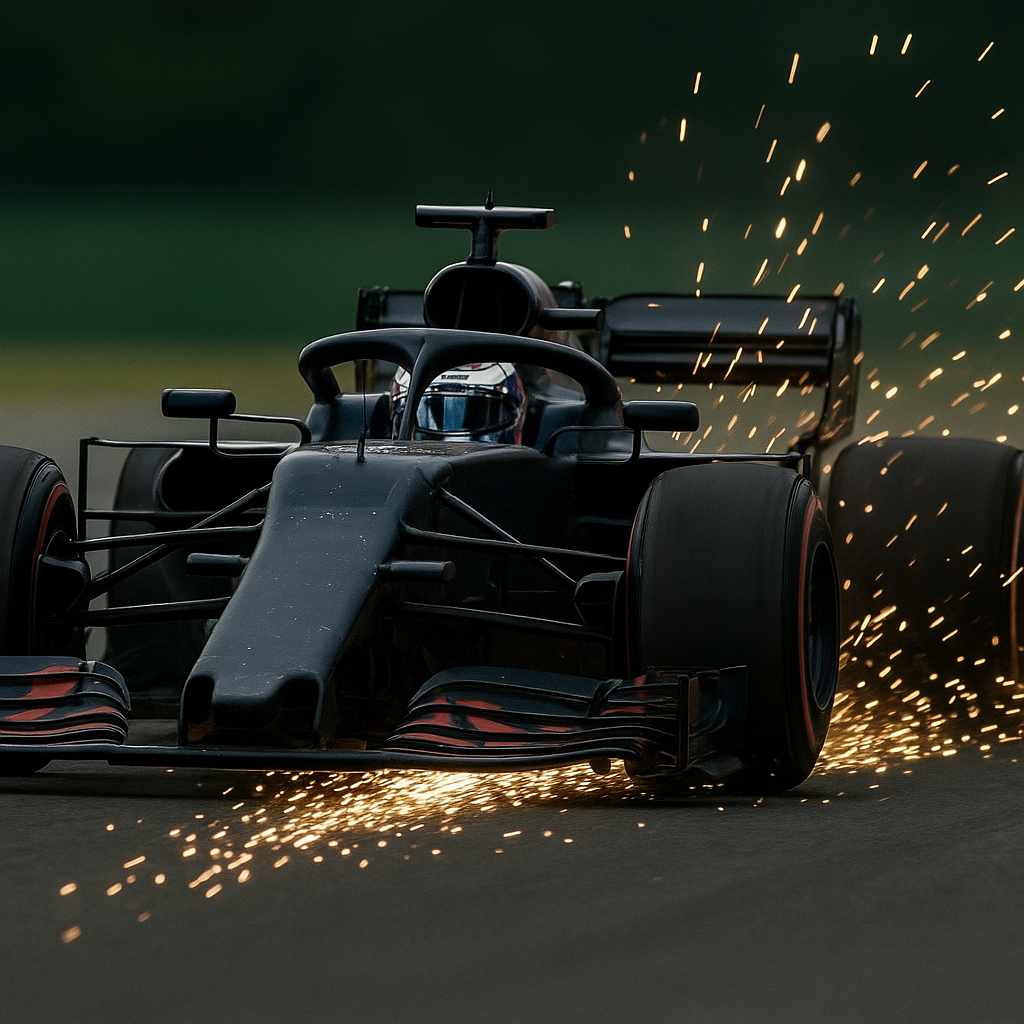
Formula 1 cars produce sparks when metal skid blocks underneath the car scrape against the track surface. These blocks, commonly made from titanium alloy, generate bright sparks when the car bottoms out at high speed. F1 cars run extremely close to the ground to improve aerodynamic performance, making occasional contact with the asphalt normal. The sparks are especially noticeable on fast straights and under artificial lighting. They generally do not indicate a mechanical failure.
Why Do Formula 1 Cars Spark?
The sparks seen behind F1 cars come from metal components underneath the chassis, not from the exhaust system, turbocharger, or normal braking.
When the underside of a car touches the track, friction removes tiny particles from its metal skid blocks. These particles become extremely hot and produce the bright sparks visible behind the vehicle.
According to Formula 1’s technical explanation, the sparks are associated with the protective plank assembly beneath the car.
What Causes Sparks Under F1 Cars?
Titanium Skid Blocks
F1 cars have a regulated protective plank assembly beneath their floors. Metal skid blocks are fitted to designated areas of this assembly.
When titanium skid blocks scrape against asphalt, friction produces glowing metal particles. These particles create the distinctive shower of sparks.
The blocks are designed to withstand contact with the track while protecting parts of the plank assembly from excessive wear.
Downforce and Low Ride Height
Formula 1 cars generate aerodynamic downforce, which pushes them toward the track and improves tire grip.
As speed increases, aerodynamic forces can compress the suspension and reduce the distance between the car and the asphalt. This distance is called ride height.
If the underside touches the surface, the car is said to be bottoming out.
Engineers balance ride height, suspension stiffness, and aerodynamic performance to maintain speed without excessive ground contact.
Bumps and Uneven Track Surfaces
Sparks can also appear when cars pass over bumps, curbs, or sudden changes in track elevation.
The amount of sparking depends on speed, suspension settings, ride height, fuel load, and track conditions.
As McLaren Racing explains, sparks frequently appear on bumpy sections and near the ends of high-speed straights, where downforce pushes cars closer to the surface.
Why Do F1 Cars Have Skid Blocks?
Skid blocks serve a practical purpose beyond producing impressive visual effects.
The plank assembly helps officials monitor whether a car has been running excessively close to the ground. The FIA regulates its construction and allowable wear.
Metal skid blocks are separate protective inserts that contact the track and help manage wear in designated areas.
Titanium offers useful strength, weight, and wear characteristics. Its widespread reintroduction in 2015 made the showers of sparks particularly noticeable.
Excessive wear of the regulated underside components can result in a car failing technical inspection.
Are Sparks Dangerous in Formula 1?
Sparks are generally a normal consequence of an F1 car touching the track, but excessive bottoming out can create problems.
Frequent or heavy ground contact can disturb the car’s handling and increase wear. If the regulated plank assembly wears beyond the permitted limits, the car may be disqualified.
Sparks can also create an external fire hazard. During the 2025 Japanese Grand Prix weekend at Suzuka, sparks from titanium skid blocks ignited dry grass beside the circuit, interrupting practice sessions.
The FIA subsequently addressed concerns about trackside fires and skid block materials. However, ordinary sparking does not automatically indicate a rules violation or immediate danger to the driver.
Ultimately, the sparks behind Formula 1 cars result from metal skid blocks scraping the track as aerodynamic forces and suspension movement bring the cars close to the ground. They are a natural consequence of high-performance racing rather than an effect created purely for entertainment.